
WEK-Gammex 610 Neonatal Chest Phantom
Mode:Gammex-610
Type:QA-Phantom
Contact: ken@hkmedqc.com
WEK-Gammex 610 Neonatal Chest Phantom.pdf
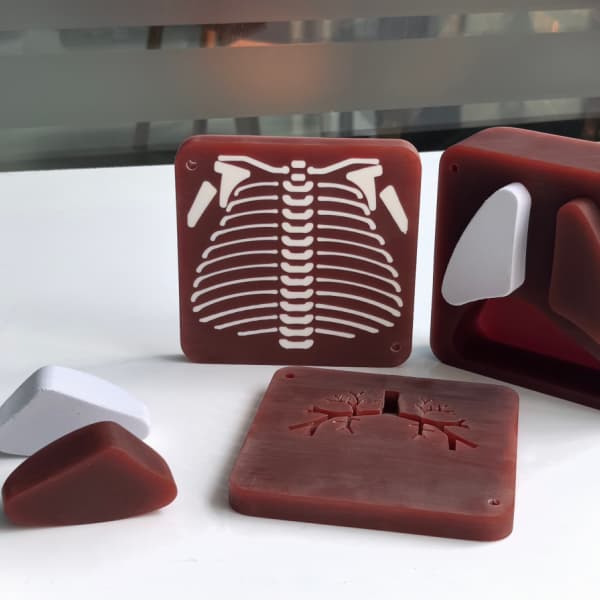
The Neonatal Chest Phantom is specifically designed for daily quality assurance monitoring of computed radiography (CR) and digital radiography (DR) systems. Because the phantom replicates the anatomical structure and tissue attenuation characteristics of a real newborn, clinical protocols can be used to image the phantom, thereby testing the entire imaging chain, including image processing parameters.
The Neonatal Chest Phantom is the first anthropomorphic neonatal phantom whose transmission properties, histogram, physical dimensions, and structure adequately represent a 1–2 kg newborn. Consequently, it can be imaged using appropriate clinical parameters to provide a measurement of image consistency over time.
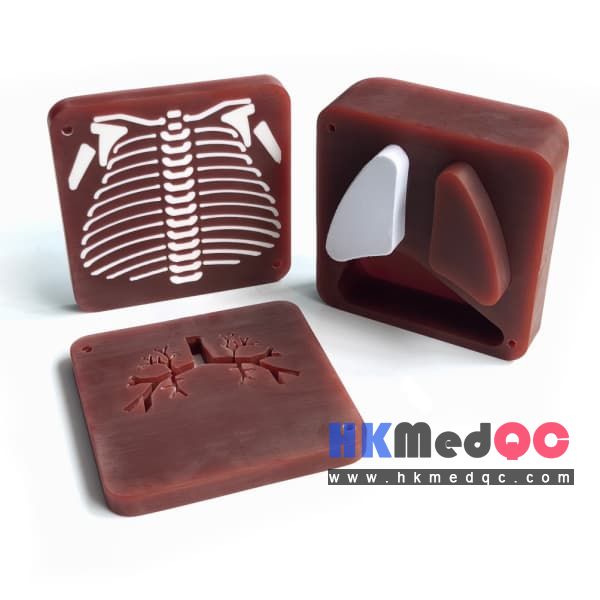
The phantom also contains clinically relevant image quality challenges for resolution and noise in the form of a lung with simulated pneumothorax with pleural thickening, and a lung with simulated hyaline membrane disease.
The Gammex 610 Neonatal Chest Phantom answers a recognized need by both international and national standards groups such as IPEM and AAPM for a comprehensive quality assurance program for computed and digital radiography addressing the two major concerns of patient exposure and image quality. Patient exposure is a concern because computed and digital radiographic equipment will scale the over exposed images to the proper optical density. The result, often referred to as "Dose Creep" is especially relevant in pediatric imaging where some patients are radiographed several times per day.
Evaluation of image quality is complicated by the way in which computed and digital radiographic systems use a-priori knowledge of anatomy being radiographed to process and display the image. Image quality can be degraded through improper parameter selection. The effect of parameter selection on image quality can only be assessed by using a phantom that replicates the human anatomy.
The Gammex 610 phantom is specially suited as a tool for establishing the lowest possible exposure level that still maintains diagnostic image quality.
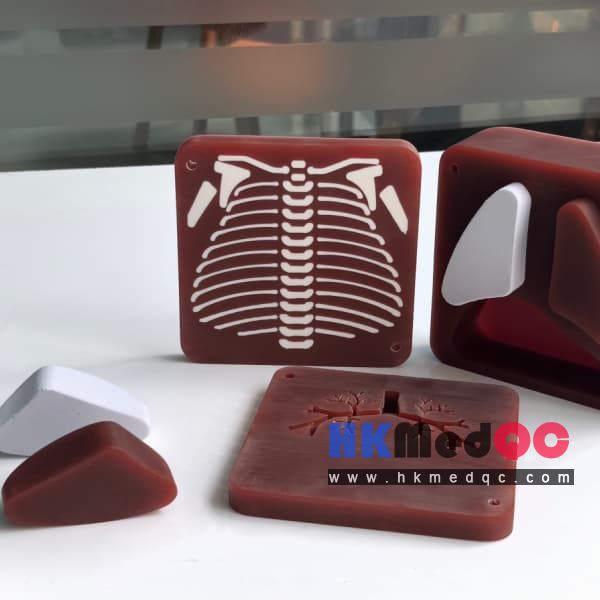
Neonatal Chest Phantom Technical Specifications
| Specification | Details |
|---|---|
| Dimensions | 100 × 100 × 54 mm |
| Weight | 500 g |
| Composition (tissue‑equivalent materials) | Air, muscle, normal lung, hyaline membrane disease lung, bone |
| Included lung inserts | #1 – Hyaline membrane disease: with pneumothorax |
| #2 – Hyaline membrane disease: without pneumothorax | |
| #3 – Normal texture: with pneumothorax | |
| #4 – Normal texture: without pneumothorax |