
Single-photon module,SPECT Imaging Phantom QA Acceptance Testing
Mode:HKM-SY01
Type:QA-Phantom
Contact: ken@hkmedqc.com
Single-photon module,SPECT Imaging Phantom QA Acceptance Testing.PDF
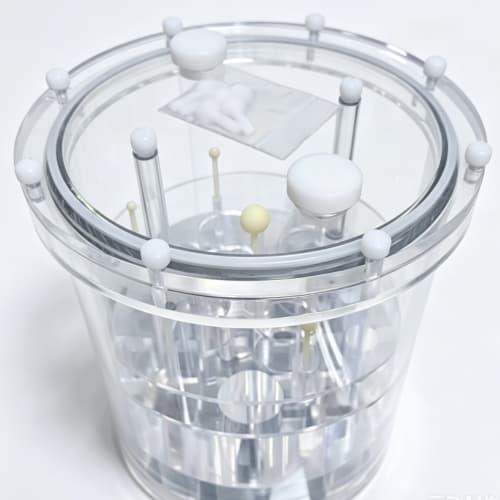
The single photon emission computed tomography system (SPECT) is based on a rotating γ-camera and consists of one or more probes (including collimators, crystals, light guides, photomultiplier tube matrices, etc.), pulse amplitude analyzers, rotating frames, low-absorption examination beds, image processing and output equipment, etc.
SPECT involves injecting single photon radioactive nuclides into the human body. Through the rotation of the probe to collect information from different angles and performing image reconstruction, it can obtain images of the radioactive spatial distribution of various tomographic sections. It is also applicable to gamma cameras, enabling the acquisition of static, dynamic, gated and whole-body scan images.
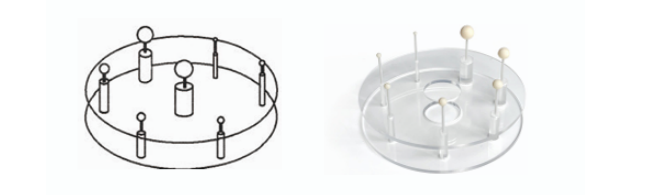
After injecting radioactive solution into the module, the rods and the sphere form the cold zone.
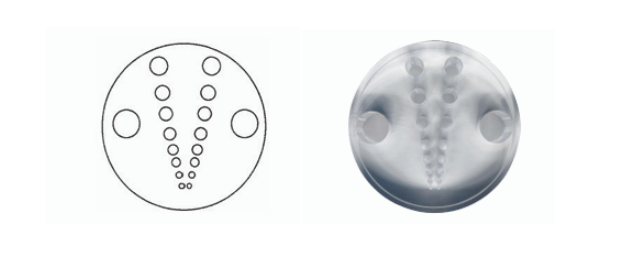
After injecting radioactive solution into the mold, the area inside the circular hole becomes the hot zone.
SPECT involves injecting single photon radioactive nuclides into the human body. Through the rotation of the probe to collect information from different angles and performing image reconstruction, it can obtain images of the radioactive spatial distribution of various tomographic sections. It is also applicable to gamma cameras, enabling the acquisition of static, dynamic, gated and whole-body scan images.
Cold zone plugin
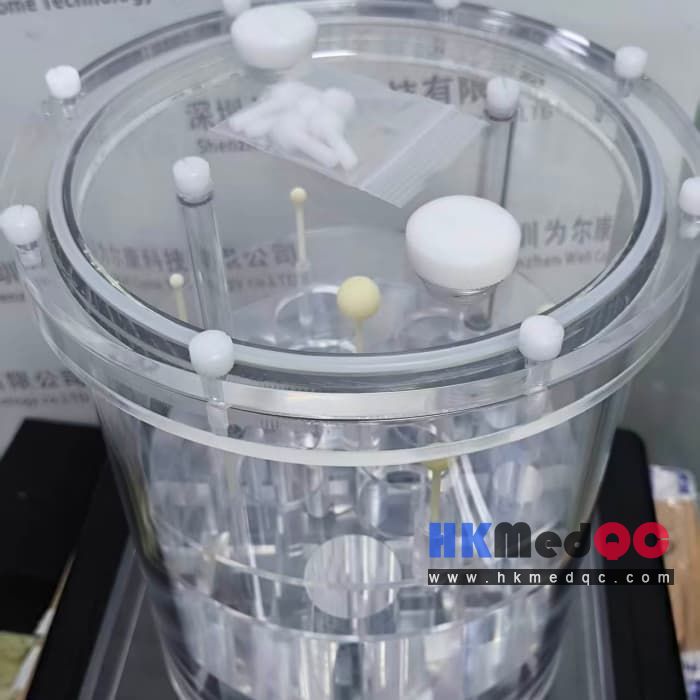
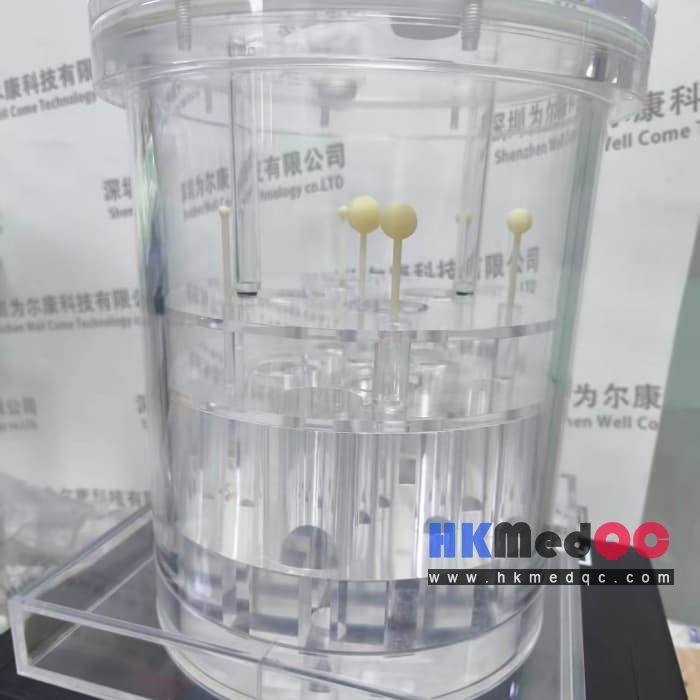
The cold zone insert consists of 7 organic glass rods and solid balls (yellow ABS balls) (see Figure A.2). The recommended diameters of the rods are 4.7mm, 5.9mm, 7.3mm, 9.2mm, 11.4mm, 14.3mm, and 17.9mm. The balls are attached to the rods and have the same diameter as the corresponding rods.After injecting radioactive solution into the module, the rods and the sphere form the cold zone.
Heat Zone Plugin
The heat zone plug consists of 8 pairs of circular holes in the acrylic sheet (as shown in Figure A. 3). The recommended hole diameters are 4.7 mm, 5.9 mm, 7.3 mm, 9.2 mm, 11.4 mm, 14.3 mm, 17.9 mm, and 22.4 mm.After injecting radioactive solution into the mold, the area inside the circular hole becomes the hot zone.
Spatial Linear and Uniformity Plugin
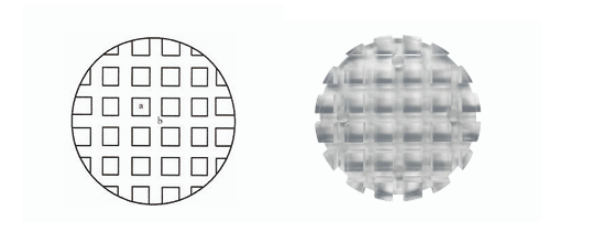
The spatial linear and uniformity plugin consists of organic glass blocks with an interlaced grid structure, and is composed of 32 square holes.
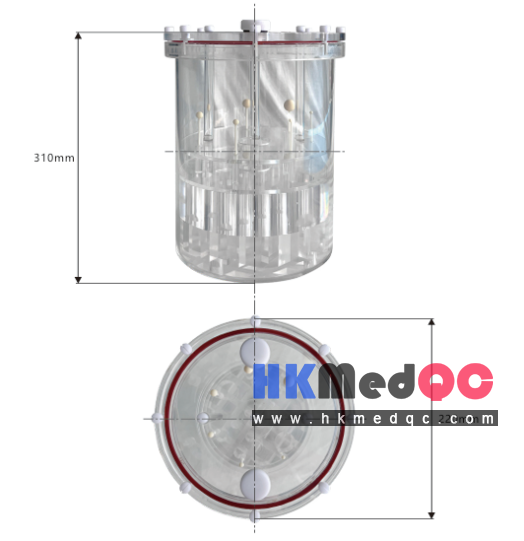
Single-photon module,SPECT Imaging Phantom QA Acceptance Testing Picture of the real object:
SAG: Single-photon module,SPECT phantom,Single Photon Emission Computed Tomography phantom,gamma camera phantom, nuclear medicine phantom,SPECT QA phantom,nuclear imaging calibration phantom