
Dermatology Procedure Practice Model,Lipoma & Cyst Practice Module
Mode:HMQ-SCEM
Type:QA-Phantom
Contact: ken@hkmedqc.com
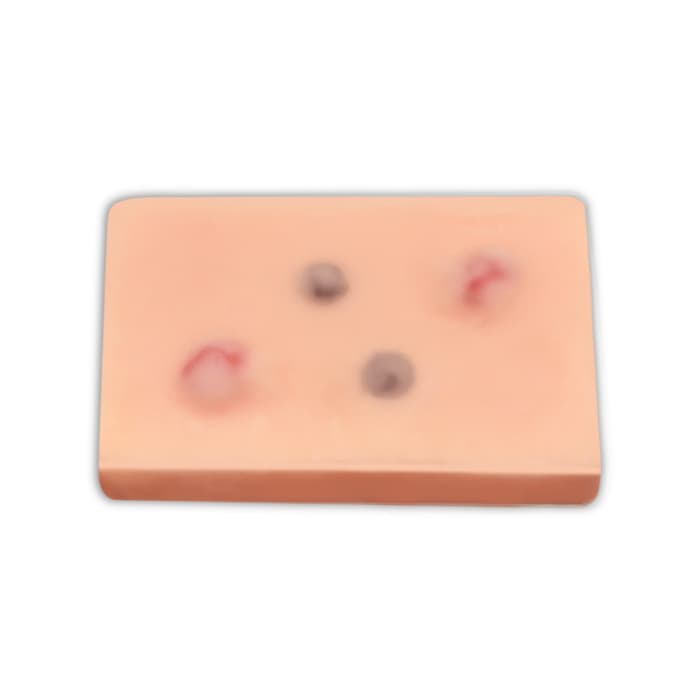
This model is designed specifically for medical teaching and clinical skills training, simulating the anatomical structure of real skin lipomas/cysts. It is suitable for practicing preoperative evaluation, aseptic procedures, local anesthesia, incision design, tumor dissection, hemostasis, and suturing. The model is made of highly realistic and environmentally friendly materials, with a realistic touch and can be reused.
1. Simulated skin layer: Layered design of epidermis, dermis, and subcutaneous tissue, with elasticity and toughness.
2. Simulation of lesions:
-Lipoma: Located in the subcutaneous layer, it wraps around simulated adipose tissue and has an adhesive design with surrounding tissues.
-Cyst: It contains gel like cystic fluid, and the cyst wall can be completely peeled off.
3. Blood vessels and nerves : Some models include simulated capillary and nerve structures to enhance operational realism.
Usage steps
1. Preoperative preparation
-Clean the surface of the model and wear sterile gloves.
-Palpation to locate the boundary of the tumor and mark the incision line (marker pen can be used).
2. Local anesthesia simulation
-Inject simulated anesthetic around the tumor (water can be used as a substitute).
3. Incision and peeling
-Cut open the epidermis and subcutaneous layer along the marked line to expose the tumor.
-Use blunt separation instruments (such as hemostatic forceps) to separate the tumor from surrounding tissue.
-If it is a cyst, the cyst wall needs to be completely removed to avoid rupture.
4. Hemostasis and suturing
-Simulate electrocoagulation or ligation hemostasis procedures.
-Layered suturing of subcutaneous tissue and epidermis (recommended to use 3-0 or 4-0 suture thread).
Precautions
-Do not use sharp tools for excessive cutting to avoid damaging the internal structure.
-When replacing cyst fluid, it is necessary to ensure that the injector is clean and avoid contamination.
-After operation, wipe the model with neutral detergent in a timely manner and store it in a cool and dry place.
-Avoid high temperatures, direct sunlight, or contact with organic solvents.
Maintenance and upkeep
-Cleaning: Wipe with a damp cloth after each use, and stubborn stains can be lightly wiped with 75% alcohol.
-Repair: Minor damages can be repaired with medical grade silicone gel; Serious damage suggests replacing the lesion module.
-Storage: Keep in a dry and cool place to avoid deformation under heavy pressure.
Applicable population
-Medical students and resident physicians
-General practitioners, surgical trainers
-Medical Skills Assessment Institution
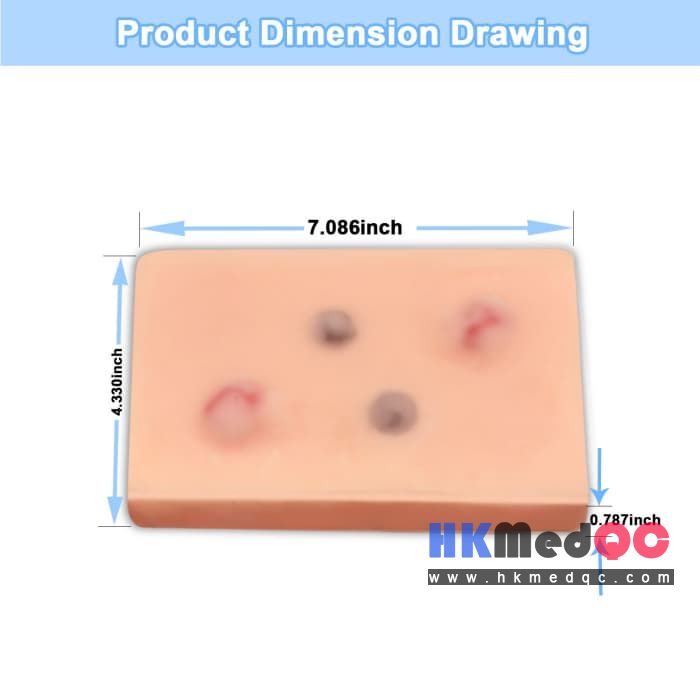
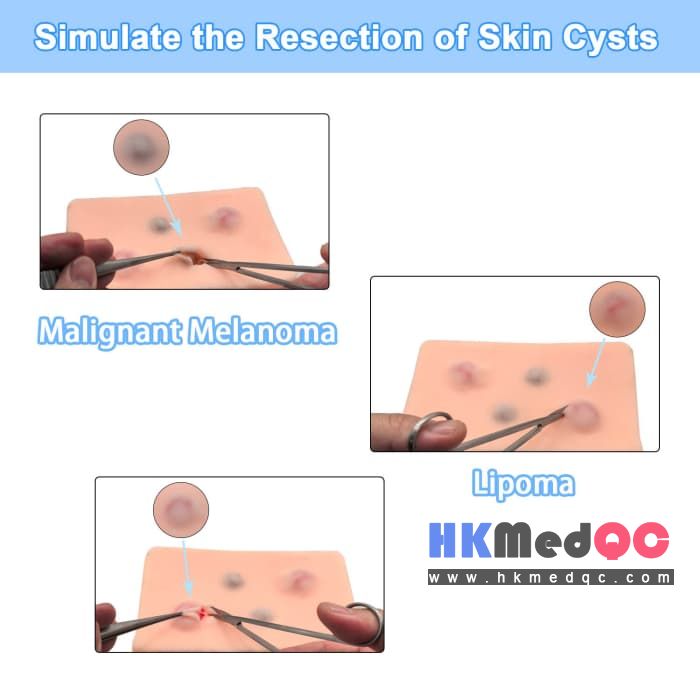
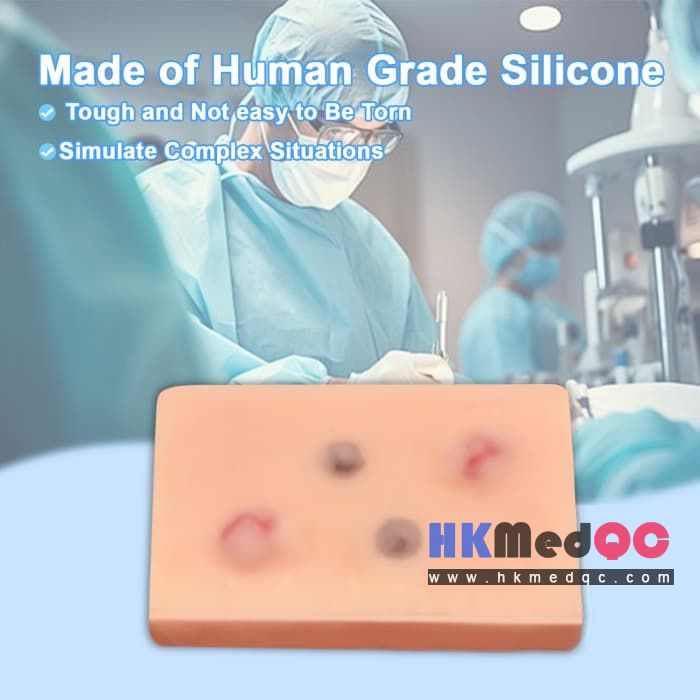
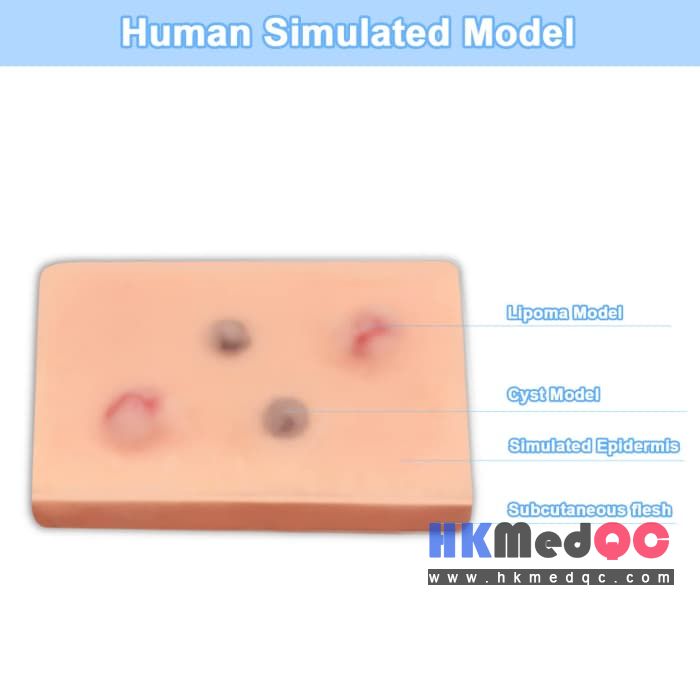
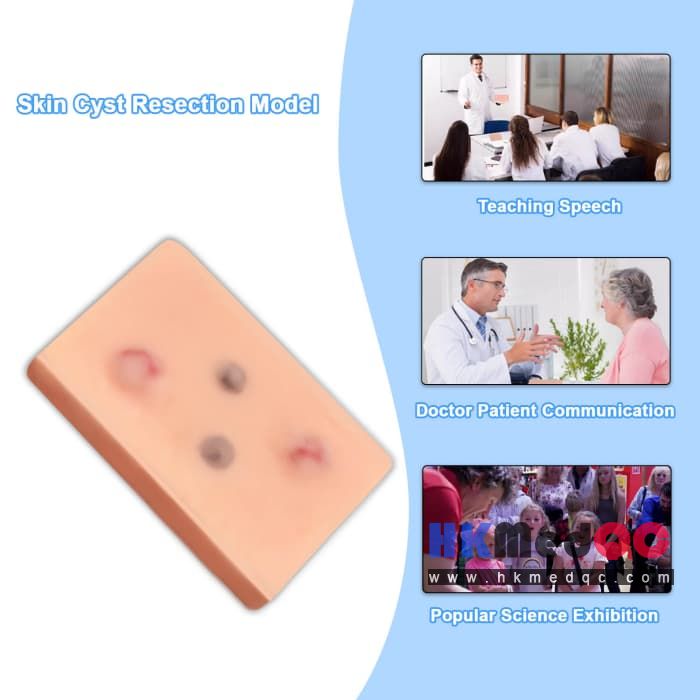
Skin Cyst Excision Training Model - Realistic Skin Lesion Model for Surgical Practice, Dermatology Training, and Cyst Removal Simulation.
Product Structure1. Simulated skin layer: Layered design of epidermis, dermis, and subcutaneous tissue, with elasticity and toughness.
2. Simulation of lesions:
-Lipoma: Located in the subcutaneous layer, it wraps around simulated adipose tissue and has an adhesive design with surrounding tissues.
-Cyst: It contains gel like cystic fluid, and the cyst wall can be completely peeled off.
3. Blood vessels and nerves : Some models include simulated capillary and nerve structures to enhance operational realism.
Usage steps
1. Preoperative preparation
-Clean the surface of the model and wear sterile gloves.
-Palpation to locate the boundary of the tumor and mark the incision line (marker pen can be used).
2. Local anesthesia simulation
-Inject simulated anesthetic around the tumor (water can be used as a substitute).
3. Incision and peeling
-Cut open the epidermis and subcutaneous layer along the marked line to expose the tumor.
-Use blunt separation instruments (such as hemostatic forceps) to separate the tumor from surrounding tissue.
-If it is a cyst, the cyst wall needs to be completely removed to avoid rupture.
4. Hemostasis and suturing
-Simulate electrocoagulation or ligation hemostasis procedures.
-Layered suturing of subcutaneous tissue and epidermis (recommended to use 3-0 or 4-0 suture thread).
Precautions
-Do not use sharp tools for excessive cutting to avoid damaging the internal structure.
-When replacing cyst fluid, it is necessary to ensure that the injector is clean and avoid contamination.
-After operation, wipe the model with neutral detergent in a timely manner and store it in a cool and dry place.
-Avoid high temperatures, direct sunlight, or contact with organic solvents.
Maintenance and upkeep
-Cleaning: Wipe with a damp cloth after each use, and stubborn stains can be lightly wiped with 75% alcohol.
-Repair: Minor damages can be repaired with medical grade silicone gel; Serious damage suggests replacing the lesion module.
-Storage: Keep in a dry and cool place to avoid deformation under heavy pressure.
Applicable population
-Medical students and resident physicians
-General practitioners, surgical trainers
-Medical Skills Assessment Institution
SAG: Skin Cyst Excision Training Model,Dermatology Surgical Practice Phantom,Lipoma Excision Training Pad,Surgical Incision Practice Model,Cyst Removal Training Tool,Nursing Student Surgical Training Kit,Medical Student Dermatology Trainer,